What Should You Look for in a Realtor Near Tinker AFB?The right realtor near Tinker AFB understands military PCS timelines, and knows the Oklahoma County submarkets — Midwest City, Del City,

Dated: June 15 2026
Views: 8970
Editor's Note: Flotilla nor the author is compensated by any provider mentioned, and have been both Cox and AT&T customers.
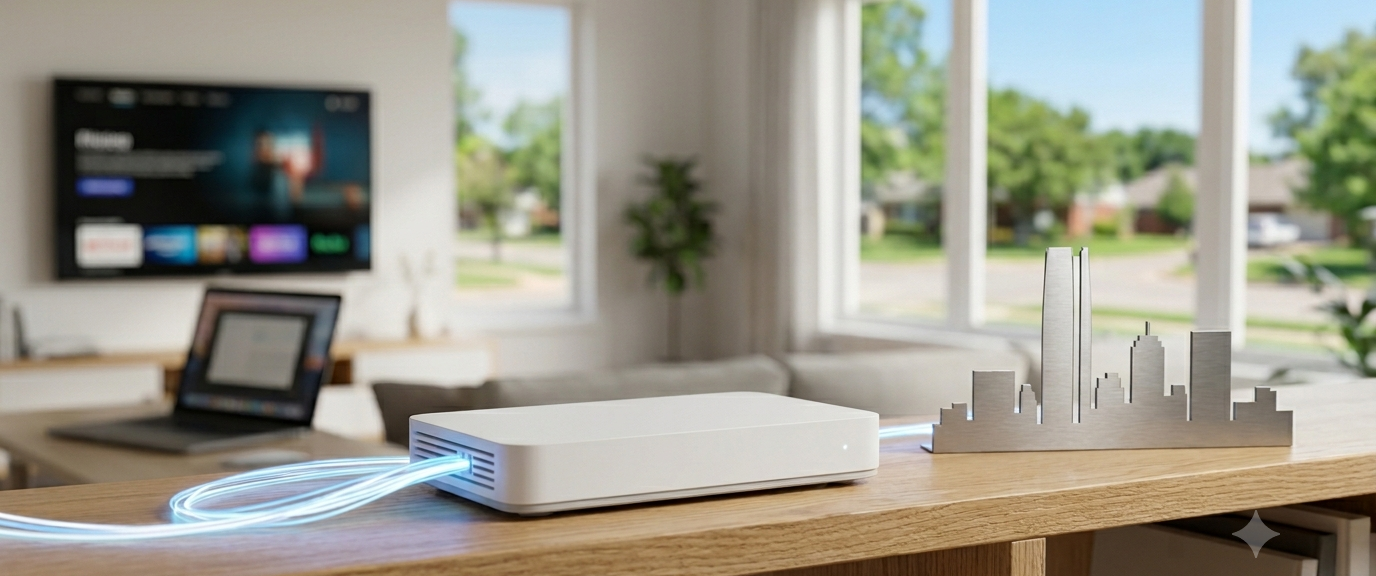
When updating an Oklahoma City property, we focus on granite counters or fresh landscaping, but your invisible infrastructure matters just as much. Technology shifts rapidly; the copper-wire networks (DSL and legacy cable) of yesterday have been replaced by fiber optic cabling, which delivers symmetrical speeds and often unlimited data at (literally) light speeds to your doorstep along with substantial monthly savings. If you haven't audited your internet bill recently, you are likely overpaying for outdated technology.
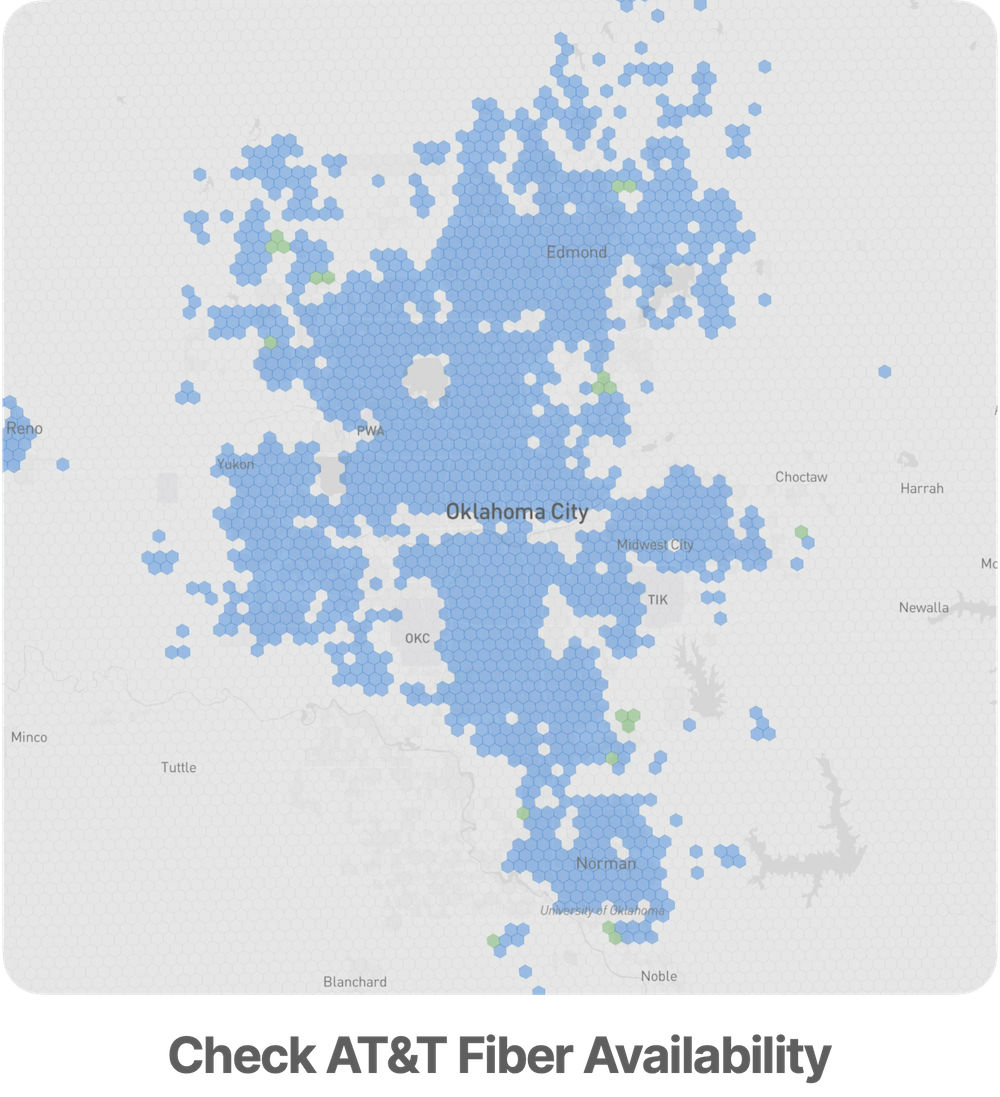
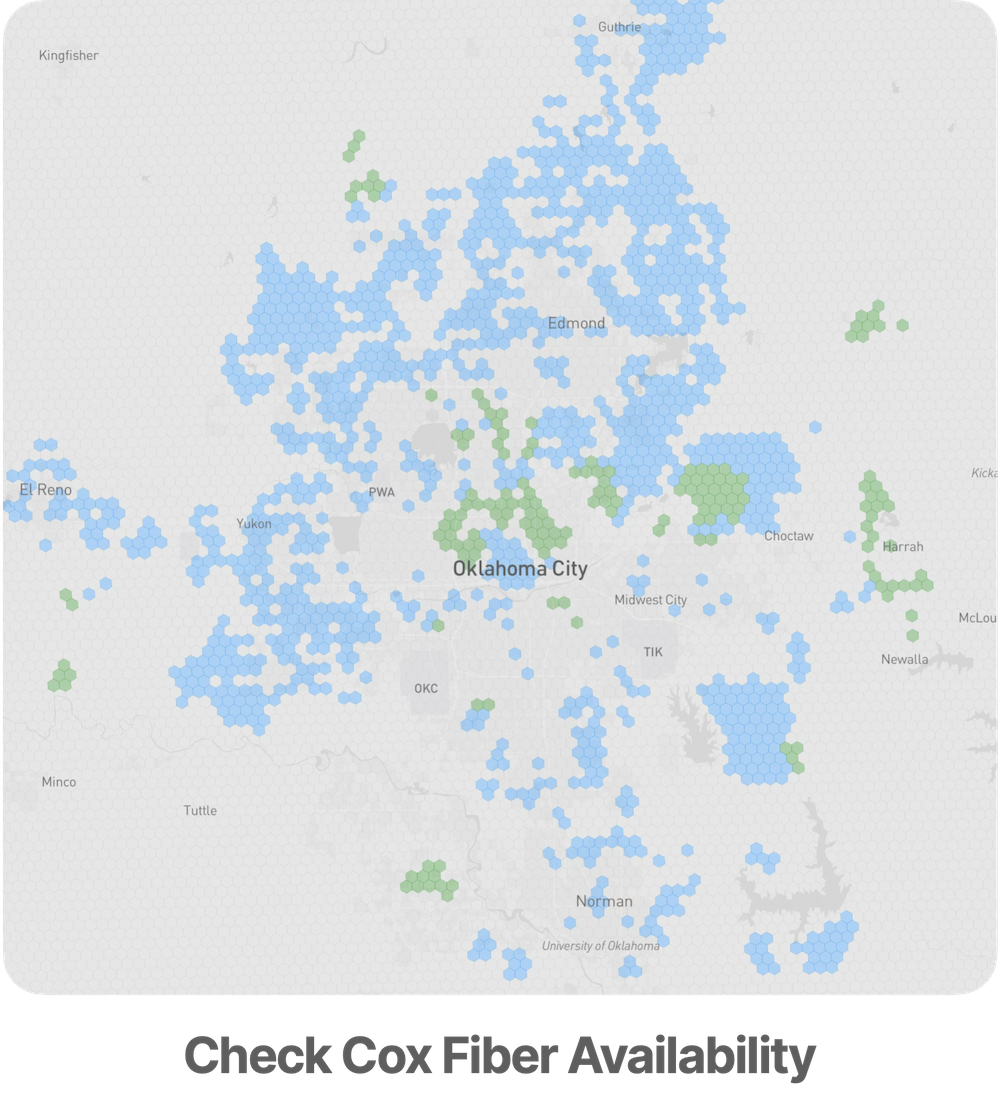
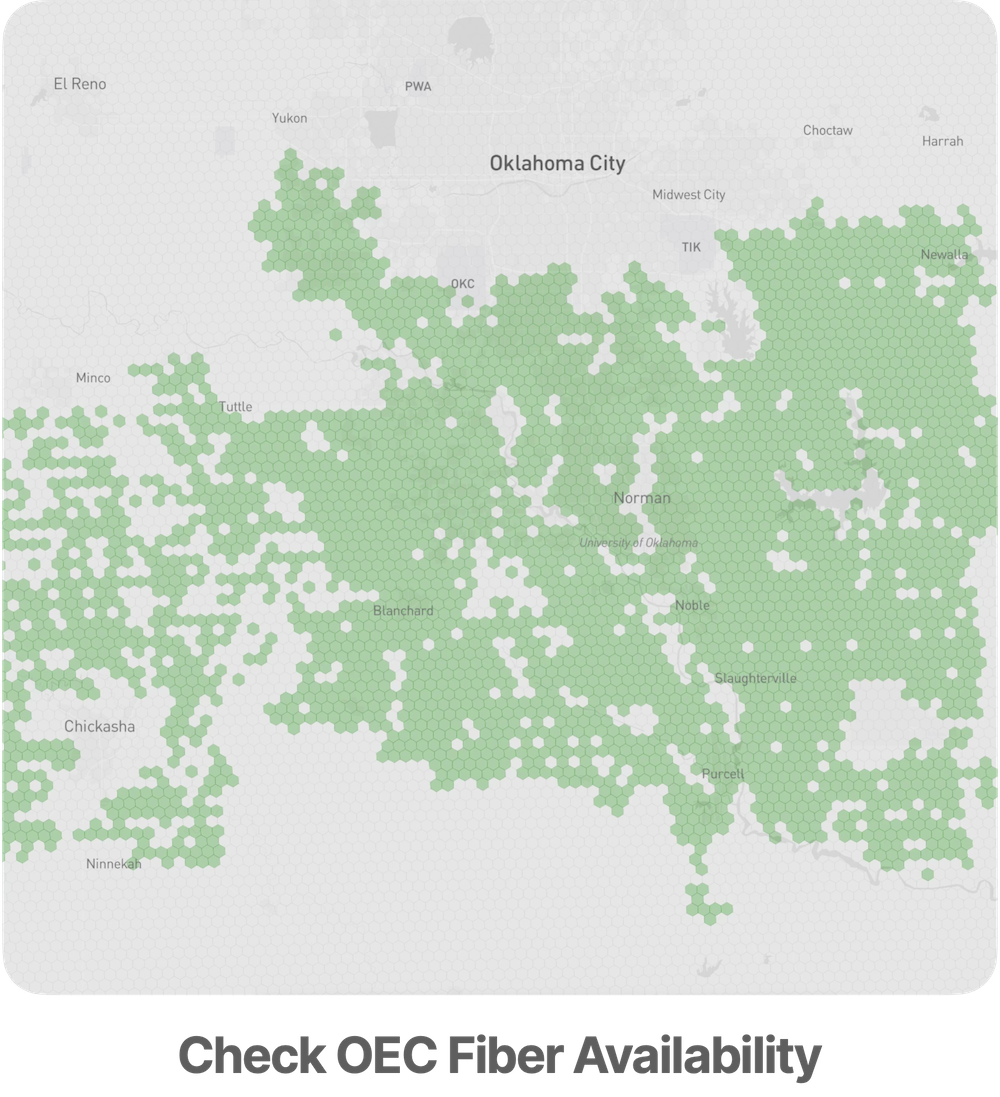
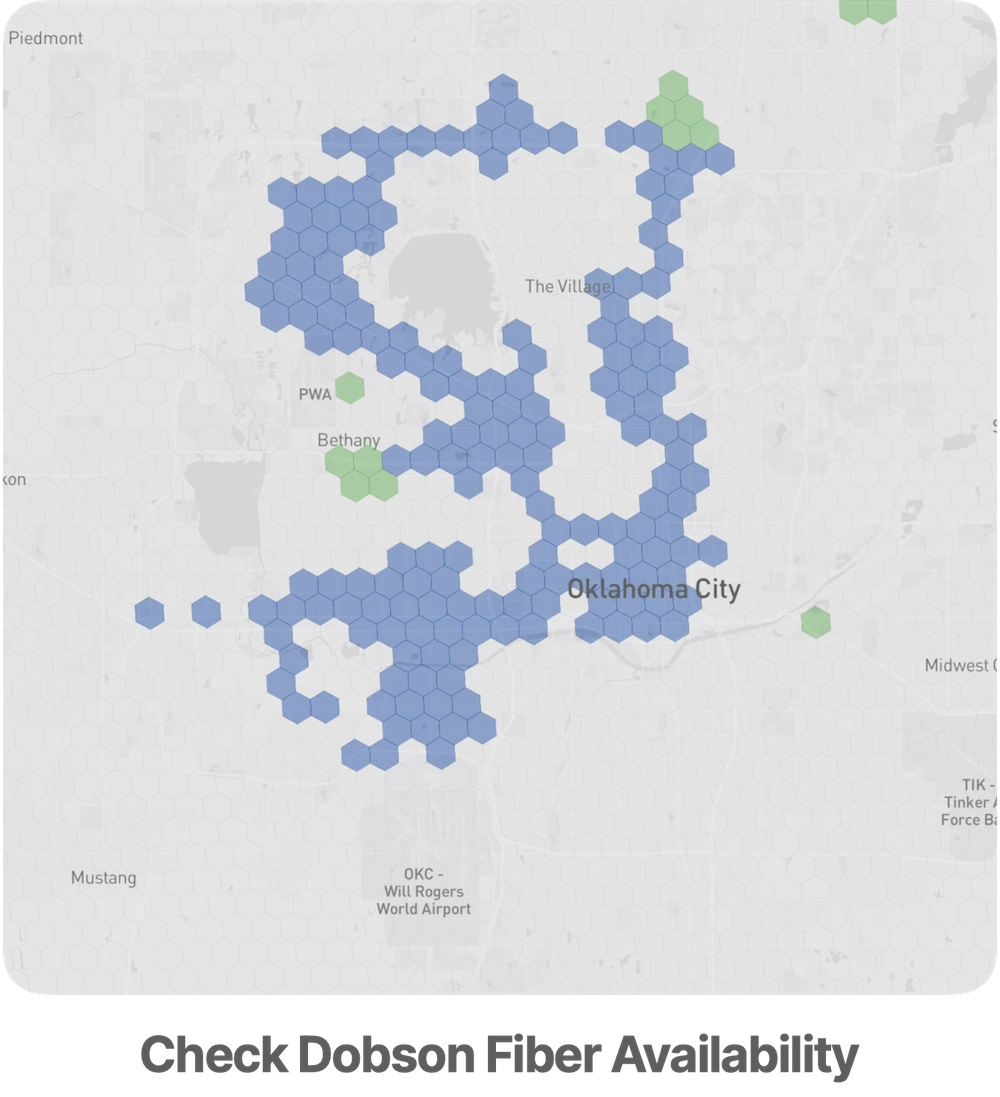
Most metro OKC residents use AT&T or Cox, while those in Norman and the semi-rural Tri-City area of Newcastle, Blanchard, and Tuttle often have access to Oklahoma-based OEC Fiber, and Dobson Fiber having sporadic coverage throughout north OKC. Review your monthly bill against these provider realities...
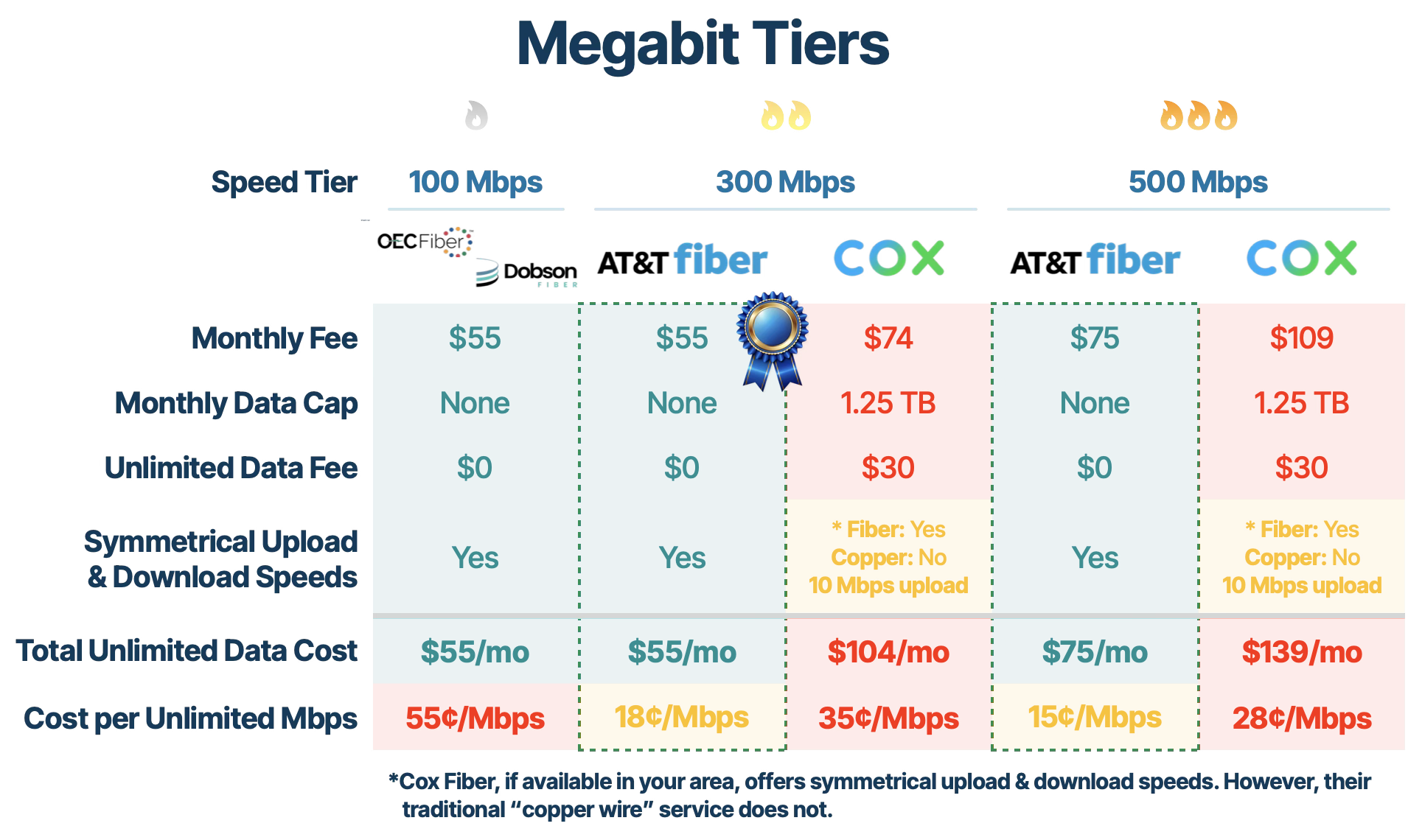
Consistently the most cost-effective option. Their 300 Mbps tier at $55/month (including a $10 discount for auto-pay/paperless billing) is our standard recommendation for most households. It features true symmetrical upload/download speeds and zero monthly data caps. AT&T users can also bundle home internet onto their mobile plan for streamlined, single-store support.
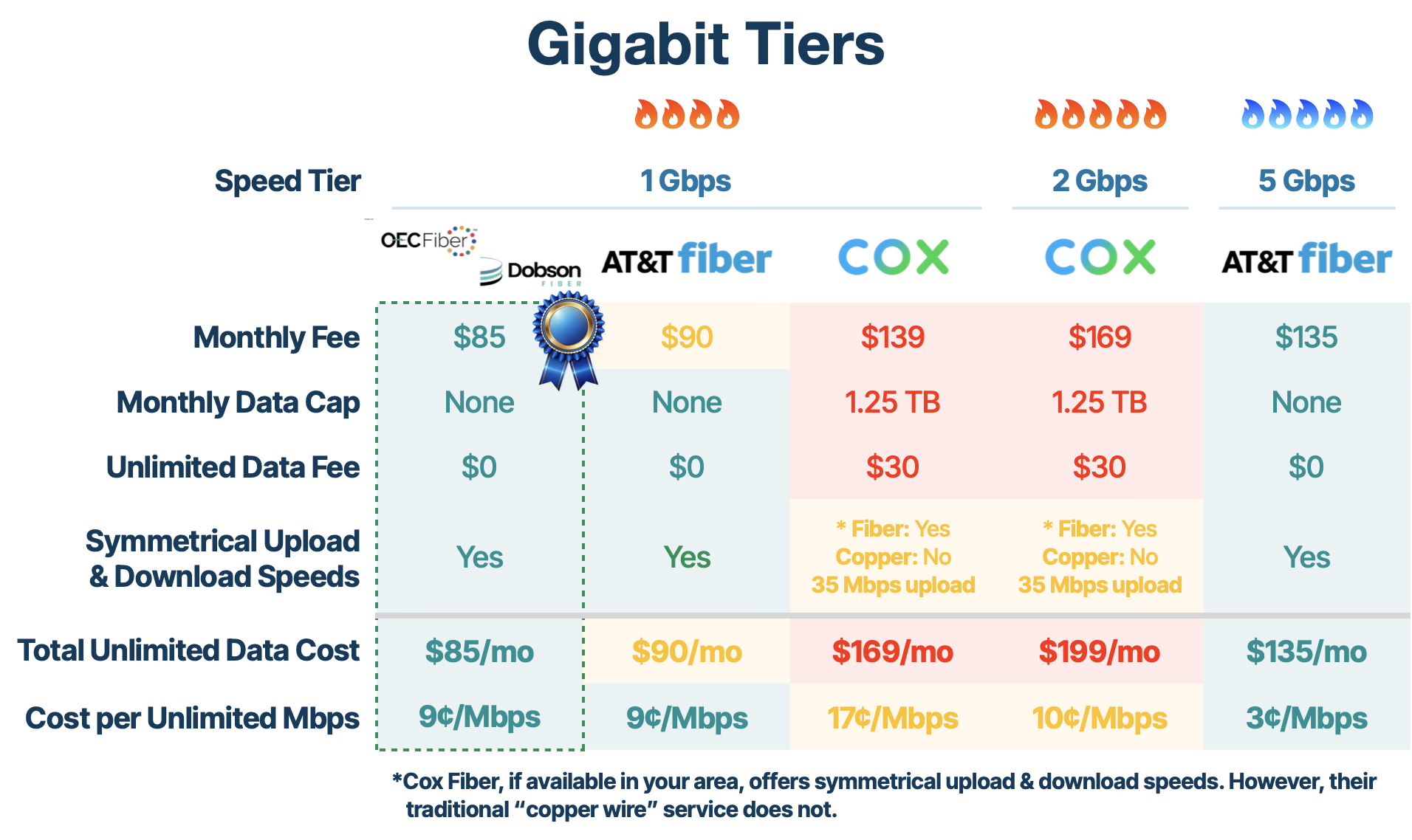
These local, Oklahoma-based providers are an excellent option to keep your dollars local. They both offer the same limited tiers at the same prices: 100 Mbps ($55) and 1 Gbps ($85). Remarkably, they beat AT&T's gigabit price by $5/month. They offer symmetrical speeds, no data caps, and great semi-rural coverage, though they lack physical retail storefronts.
Operating on legacy copper wire or limited fiber areas, Cox consistently ranks as the most expensive provider. The critical flaw is their universal 1.25 TB data cap. Removing this cap requires an additional $30/month "unlimited data" upgrade. At the 300 Mbps tier, this drives your true cost up to $104/month—nearly double AT&T's price. In short, if fiber service from other providers is available at your home, there is no scenario where Cox makes financial sense.
Both Cox & AT&T offer low-cost internet plans with unlimited data for qualifying government assistance households (SNAP, WIC, veterans, some tribal programs, etc.)—Cox Connect2Compete & ConnectAssist and AT&T Access. They're worth checking into to see if you qualify!
Providers aggressively market multi-gigabit speeds, but you likely need less bandwidth than you think. Our baseline rule of thumb is 100 Mbps per internet-using household member.
A 1-to-2 person household thrives perfectly on 100 or 300 Mbps. A household of three or four finds their sweet spot at 300 to 500 Mbps, while larger homes of six can round up to 1 Gbps. Speeds beyond 1 Gbps currently tend to be a waste of money; consumer 4K video streams are highly compressed and consume only about 25 Mbps per active video stream according to the FCC Broadband Conumer Guide.
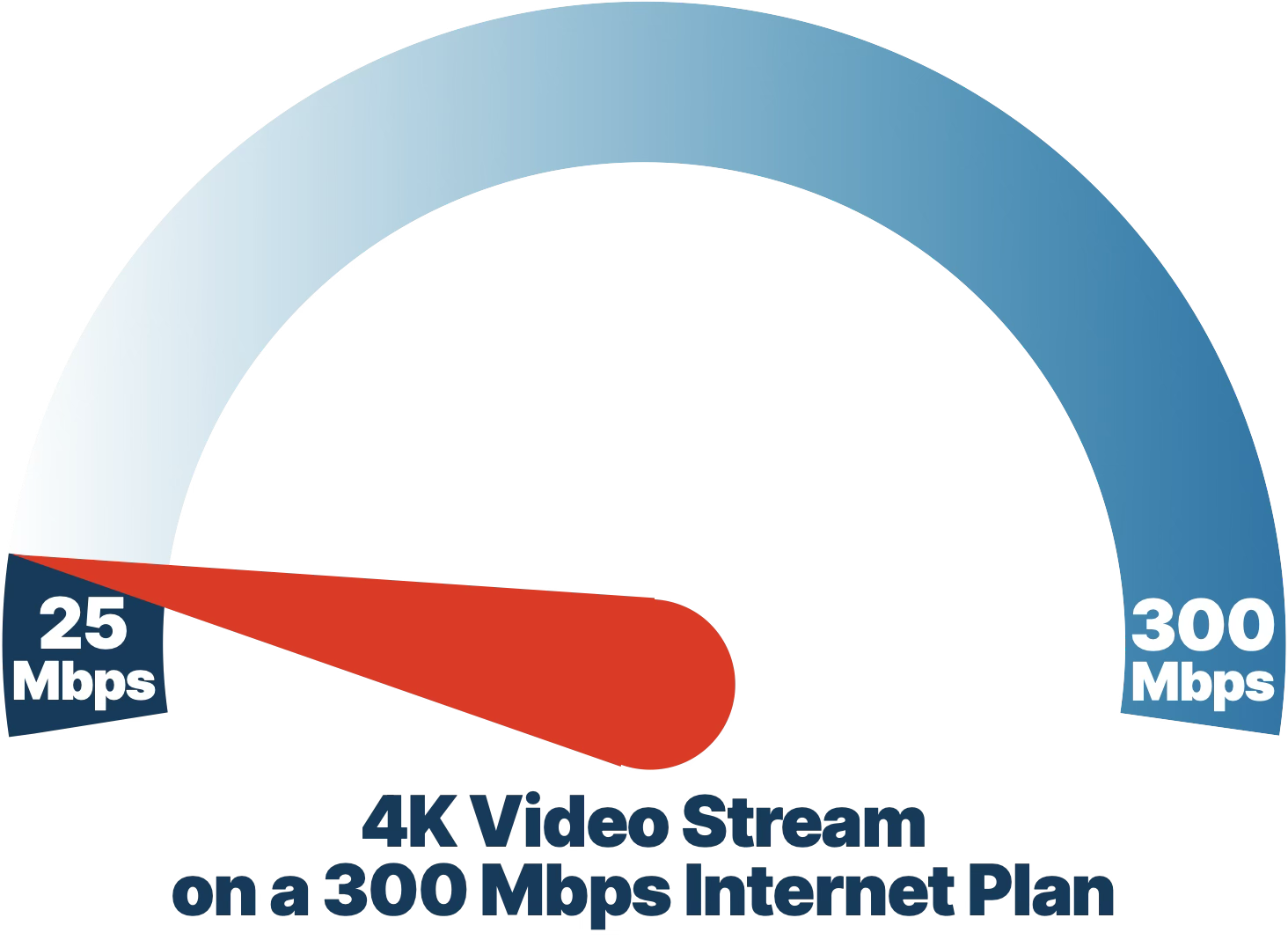
25 Mbps is one-quarter of a 100 Mbps connection, meaning 4 people could watch their own 4K video stream comfortably (so imagine what's possible with even a "low-tier" 300 Mbps plan).
If your connection feels sluggish, don’t upgrade to a costlier tier as your first solution. Instead, look into your Wi-Fi hardware and layout. Using a wired ethernet connection when location allows, moving your router, upgrading to a multi-access point mesh network, or using powerline ethernet adapters to route data through your home's electrical wiring (yes, that's possible!) might fix the root problem for dead zones permanently without adding recurring monthly utility costs that add up over time.
Tech-minded gamers often insist they require multi-gigabit packages, but competitiveness in online gaming relies on the speed of small packets of data called latency (ping) rather than massive speed tiers. A 300 Mbps fiber line delivers the same competitive advantage as a 5 Gbps tier as latency is measure of immediate, small data transfer (such as the click of a mouse or controller button to take out an opponent)—not a prolonged, large data transfer (as in downloading the game itself).
"The Federal Communications Commission (FCC) recommends a minimum 4 megabits per second (Mbps) download speed in order to play online multiplayer games. In other words, [gamers] can get by with an inexpensive internet package and be just fine (provided your network isn’t congested with other devices). Transmitting your character’s position and status doesn’t take many bits and bytes. Having a good online experience is less about speed and more about latency (also called lag or ping)—the amount of time in miliseconds it takes for a packet of data to travel between devices."
—Republic of Gamers, "How Fast Should My Internet Be for Gaming?"
Where speed tiers do impact gamers is file downloads, but game-hosting servers restrict download speed on their end anyway. The true threat to a gamer is Cox's 1.25 TB data cap. Modern, triple-A game downloads routinely exceed 100 GB, meaning an active gaming household can trigger steep data overages over the course of a month. For households with gamers, choosing a fiber plan with unlimted data included (AT&T, OEC, or Dobson) is vastly more important than upgrading to costlier speed tiers.
To maximize your utility savings, aggressively decline provider add-ons. Features like AT&T’s All-Fi Pro ($25/month), HomeTech Protection ($25/month), or Cox’s Panoramic WiFi router rentals ($15/month) are entirely unnecessary. The one-time cost of buying your own standalone router from a retail store like Best Buy eliminates perpetual rental fees, pays for itself in months, and gives you permanent ownership of your hardware.
To maximize your monthly household savings, use our baseline rule of thumb: allocate 100 Mbps per internet-active home member. For most homes, a 300 Mbps fiber tier hits the absolute sweet spot of price & performance at $55/month with the option to upgrade to a 500 Mbps or 1 Gbps tier if determined necessary. By transitioning from copper cable to an unlimited data fiber provider like AT&T, OEC, or Dobson, rejecting useless device & protection upsells, and purchasing your own routing hardware to avoid rental fees, you can protect your budget and easily carve $50 to $100 out of your monthly home operational costs!
 |  |
 |  |
Disclaimer: Market offerings for the Oklahoma City metropolitan area compiled as of June 2026. Infrastructure availability varies by neighborhood. Verify your specific address on provider coverage maps to confirm service eligibility.
© 2026 Flotilla Holdings, Inc.

Wes has been working with computers since he was a kid in the 80s. In high school during the late 90s, he taught himself Adobe Photoshop, and even launched a fan website for his favorite band that att....
What Should You Look for in a Realtor Near Tinker AFB?The right realtor near Tinker AFB understands military PCS timelines, and knows the Oklahoma County submarkets — Midwest City, Del City,
The Oklahoma City housing market is undergoing a noticeable shift toward a more balanced environment as we head into the fall. With a significant jump in new properties hitting the market and total
Ask a handful of REALTORS® how the housing market is doing and you’ll probably get a couple of different answers. That’s because right now, the market runs on two very different
Our obsession with Turkish culture originally started with a search for vibrant Turkish mosaic glass lamps. At the 2025 Oklahoma State Fair, our favorite lamp vendor gave us the ultimate insider:
 Copyright© 2026 MLSOK, Inc. listing content is believed to be accurate but is not guaranteed. Subject to verification by all parties. The listing information being provided is for consumers personal, non?commercial use and may not be used for any purpose other than to identify prospective properties consumers may be interested in purchasing. This listing data is copyrighted and may not be transmitted, retransmitted, copied, framed, repurposed, or altered in any way for any other site, individual
and/or purpose without the express written permission of MLSOK, Inc. Information last updated on September 21, 2026 7:25 PM UTC
© 2026 OKC Metropolitan Association of REALTORS® (OKMAR). All rights reserved.
Disclaimer: All information deemed reliable but not guaranteed and should be independently verified. All properties are subject to prior sale, change or withdrawal. Neither listing broker(s) nor September 21, 2026 7:25 PM UTC shall be responsible for any typographical errors, misinformation, misprints and shall be held totally harmless.
Data last updated on September 21, 2026 7:25 PM UTC
Show More...
Copyright© 2026 MLSOK, Inc. listing content is believed to be accurate but is not guaranteed. Subject to verification by all parties. The listing information being provided is for consumers personal, non?commercial use and may not be used for any purpose other than to identify prospective properties consumers may be interested in purchasing. This listing data is copyrighted and may not be transmitted, retransmitted, copied, framed, repurposed, or altered in any way for any other site, individual
and/or purpose without the express written permission of MLSOK, Inc. Information last updated on September 21, 2026 7:25 PM UTC
© 2026 OKC Metropolitan Association of REALTORS® (OKMAR). All rights reserved.
Disclaimer: All information deemed reliable but not guaranteed and should be independently verified. All properties are subject to prior sale, change or withdrawal. Neither listing broker(s) nor September 21, 2026 7:25 PM UTC shall be responsible for any typographical errors, misinformation, misprints and shall be held totally harmless.
Data last updated on September 21, 2026 7:25 PM UTC
Show More...
 MLS Technology® Oklahoma; All information deemed reliable but not guaranteed. All properties are subject to prior sale, change or withdrawal. Neither listing broker(s) or information provider(s) shall be responsible for any typographical errors, misinformation, misprints and shall be held totally harmless. Listing(s) information is provided for consumer's personal, non-commercial use and may not be used for any purpose other than to identify prospective properties consumers may be interested
in purchasing. The data relating to real estate for sale on this website comes in part from the Internet Data Exchange program of the Multiple Listing Service. Real estate listings held by brokerage firms other than Flotilla Real Estate Partners may be marked with the Internet Data Exchange logo and detailed information about those properties will include the name of the listing broker(s) when required by the MLS. Copyright ©2026 All rights reserved.
Last Updated: September 21, 2026 7:24 PM UTC
Show More...
MLS Technology® Oklahoma; All information deemed reliable but not guaranteed. All properties are subject to prior sale, change or withdrawal. Neither listing broker(s) or information provider(s) shall be responsible for any typographical errors, misinformation, misprints and shall be held totally harmless. Listing(s) information is provided for consumer's personal, non-commercial use and may not be used for any purpose other than to identify prospective properties consumers may be interested
in purchasing. The data relating to real estate for sale on this website comes in part from the Internet Data Exchange program of the Multiple Listing Service. Real estate listings held by brokerage firms other than Flotilla Real Estate Partners may be marked with the Internet Data Exchange logo and detailed information about those properties will include the name of the listing broker(s) when required by the MLS. Copyright ©2026 All rights reserved.
Last Updated: September 21, 2026 7:24 PM UTC
Show More...
